
Setting Up Conversion Tracking
Note
- Conversion tracking is only available for user events where the Mark as conversion active option is enabled.
- Before setting up conversion tracking, set up conversion data transfer to the system via API resource Generate event.
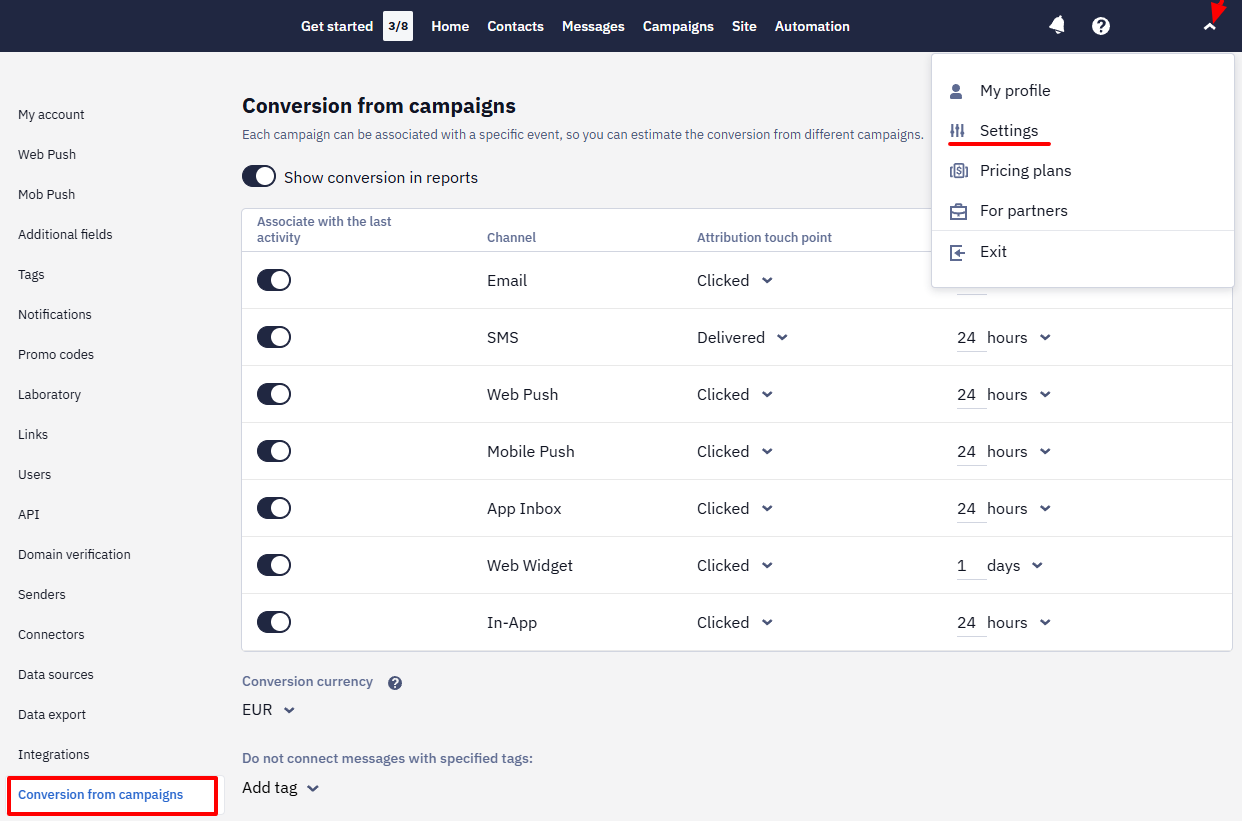
- Go to your profile Settings → Conversion from campaigns.
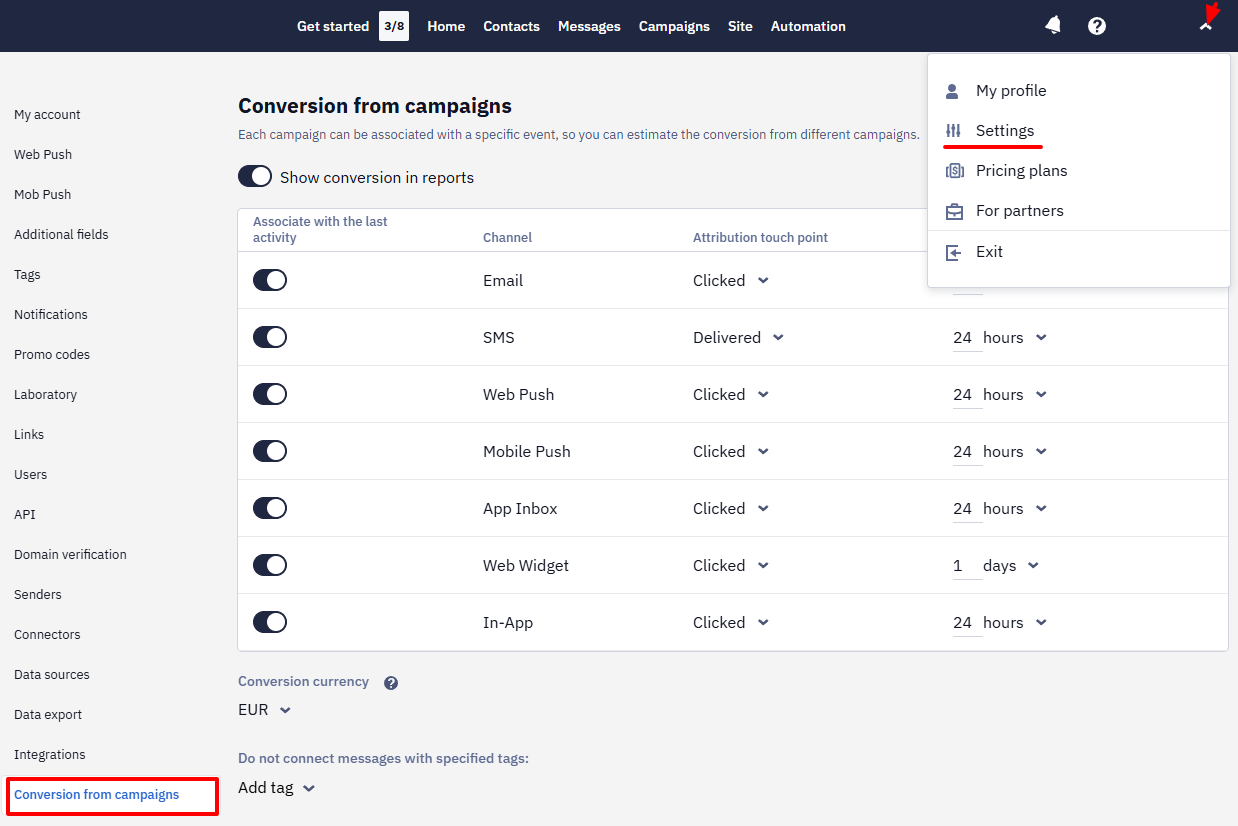
- Select the following parameters for each channel:
- Attribution touch point: a user action with a message or widget associated with a conversion.
- Attribution window: the time gap between the touchpoint and the conversion.
NoteConversion is always linked to the most recent interaction with the channel.
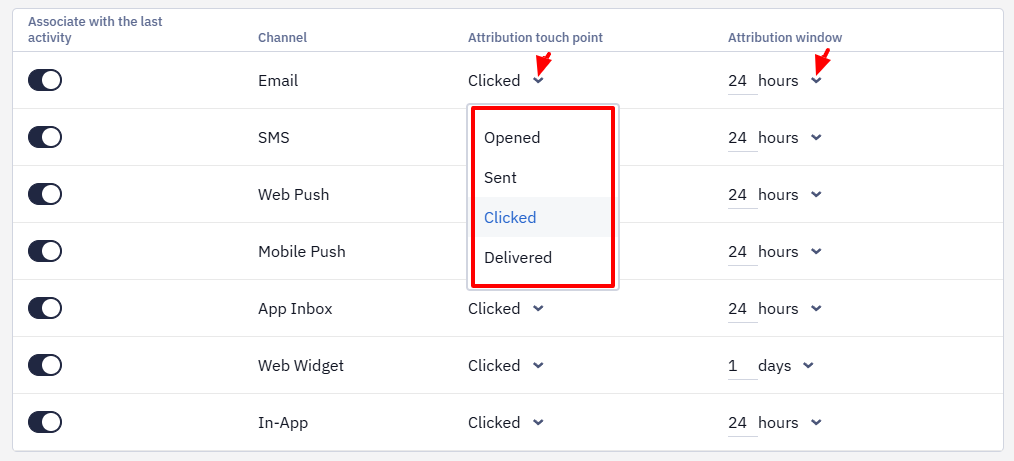
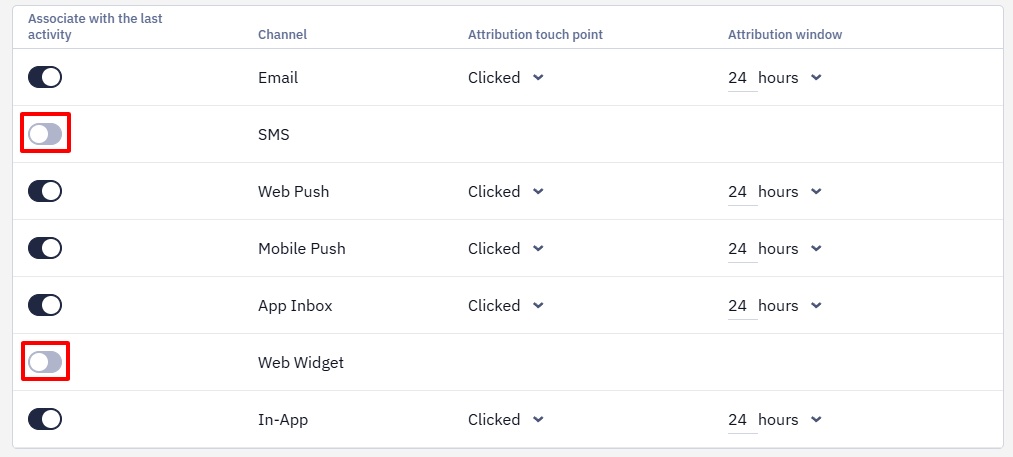
Points 3-4 are optional.
- Deactivate the Associate with the last activity parameter for any channel if you need to exclude it from the reports.
- Add message tags. Exclude specific messages from the conversion calculation (technical notifications, password recovery, delivery confirmation, etc.). Data on them will be available in the report but won’t be included in the conversion calculation.
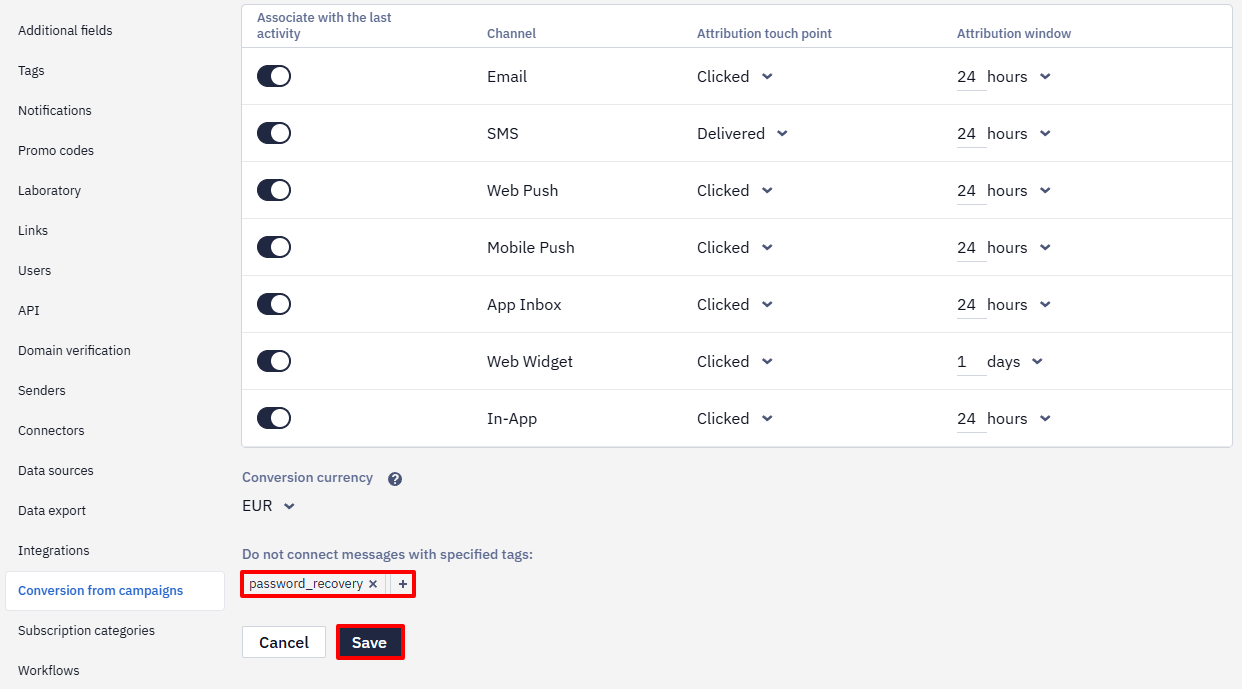
- Click Save.
Displaying Conversions in Reports
To view conversions in reports:
- Go to Campaigns → Reports and select the channel. For example, triggered email campaigns.
The total conversions will appear at the top of the table, with each report’s conversion metrics shown separately.
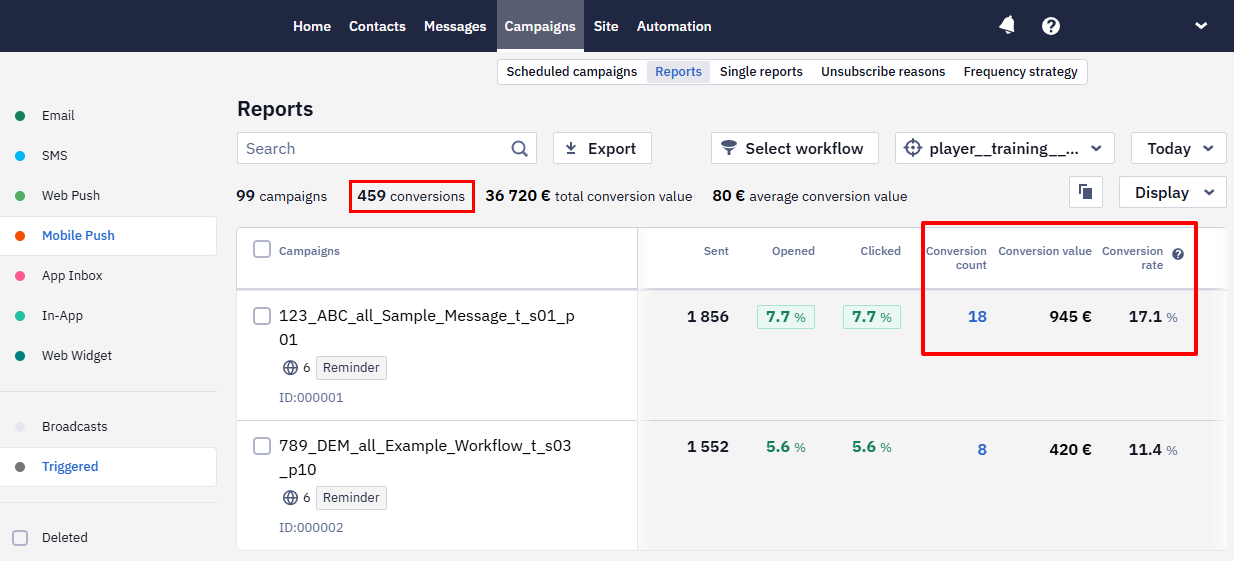
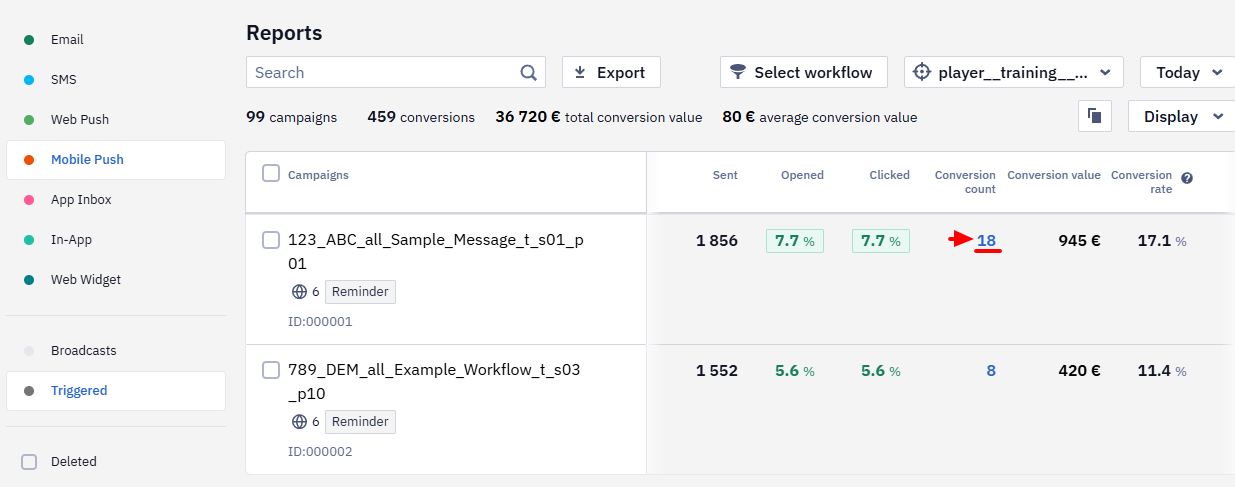
- Click on the number of Conversion count to open a window with detailed conversion information.
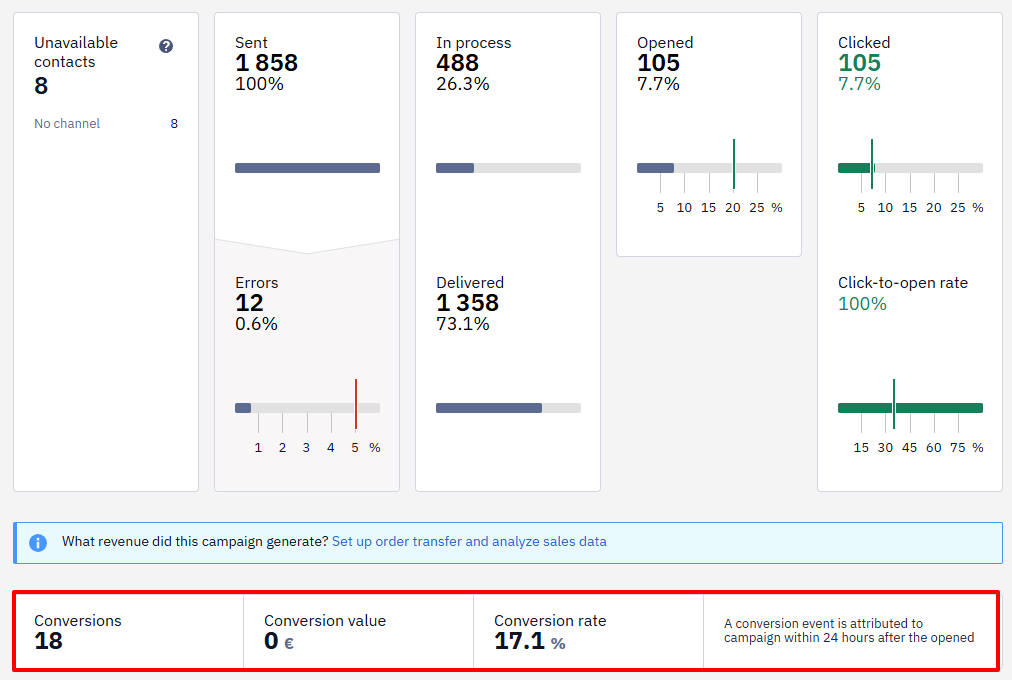
Conversions will also be displayed within the report:
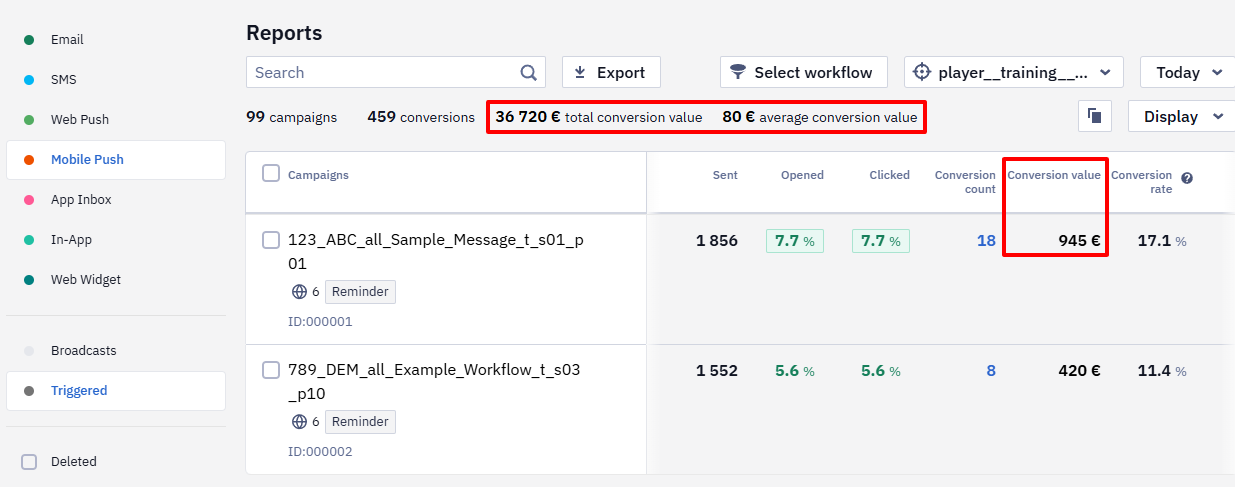
Displaying Conversion Value in Reports
The conversion value will be shown if the event includes parameters such as totalCost and currency.
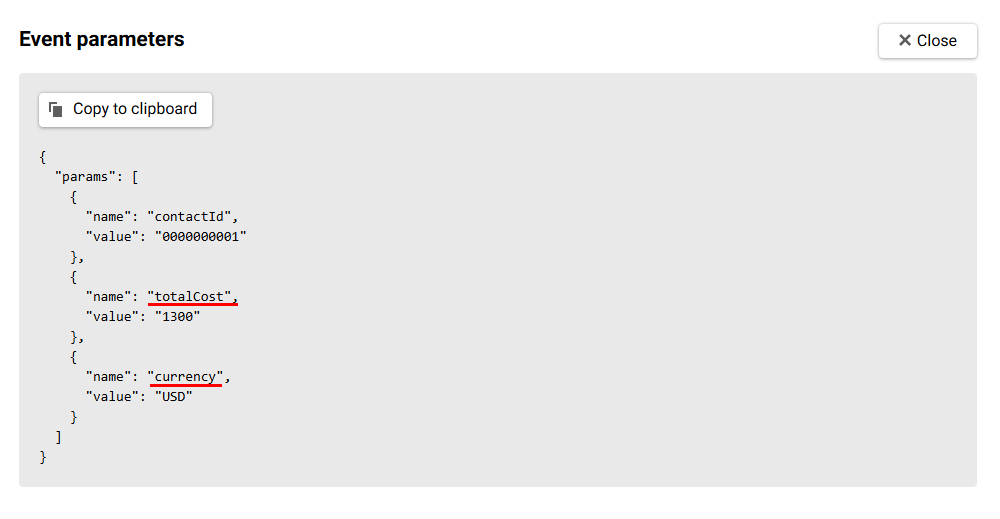
The total conversion and average conversion value will appear at the top of the table, with each report’s conversion value shown separately.
Counting Conversions
More about counting conversions >
Currency Settings
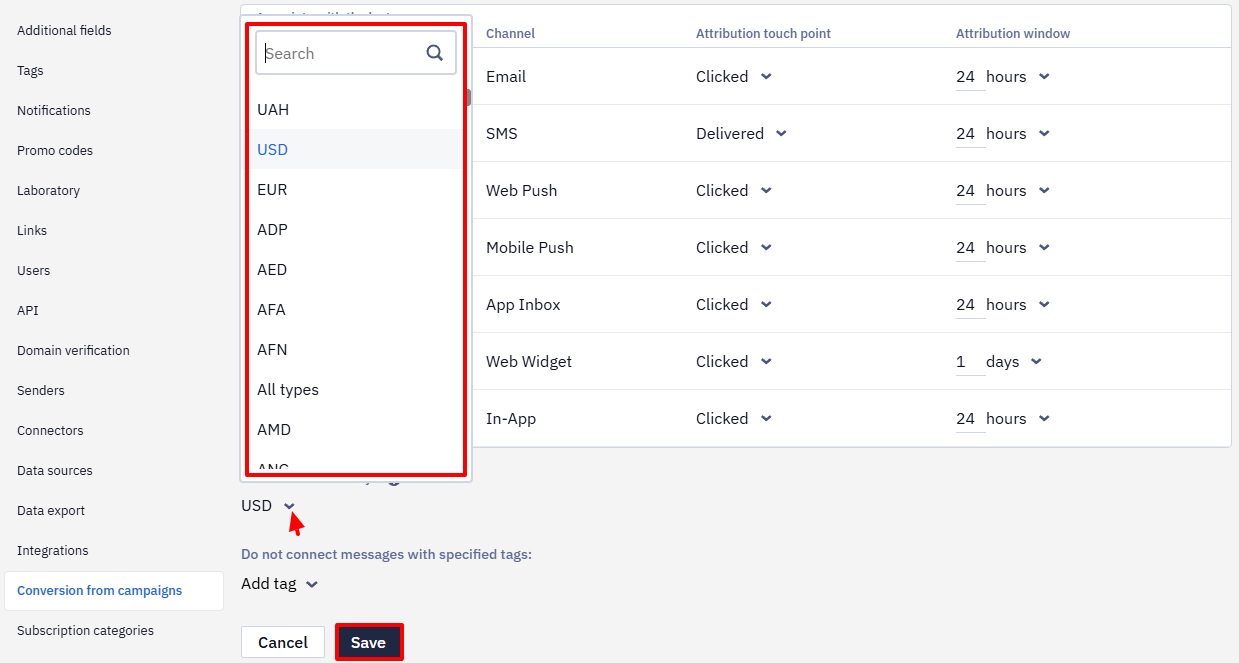
- Go to your profile Settings → Conversion from campaigns.
- Select a currency code from the drop-down menu and click the Save button.
Notes on Attribution
- An update to an existing order enters attribution as a new event. If the update arrives after the contact interacted with a message, the conversion is attributed to that message — even when the order itself was created before the send. This behaviour is not configurable.
- For orders passed through web tracking, the sale is linked to a campaign by the
etm_termtag in the message links, which carries the send and contact identifiers. If that tag is stripped on the website side, the sale has nothing to match against and stays unattributed even though the contact did follow the link. - A sale is always attributed to the last activity, whichever channel it happened in. Each channel counts the action set as its Attribution touch point, so a later In-App view can take the sale from an earlier email click.
- One sale is counted for a single campaign only: if a purchase has already been counted in one campaign's revenue, it isn't counted in another — even when the campaigns were sent close together.
- The link to a campaign follows the criterion you choose: when that criterion is sent, delivered or opened, a sale counts without a click. The number then shows how many sales followed a campaign, so it can differ from the campaign revenue in a CRM or web analytics, which counts purchases made after a click.
- The Attribution window is counted up to the event that counts towards the conversion, not up to the moment the order is created. When an order is created inside the window but its qualifying event arrives after the window ends, the sale is not counted.
- A change to the Attribution touch point or the Attribution window applies to later campaigns only: revenue for campaigns already sent is not recalculated under the new settings.
Updated 1 day ago
Did this page help you?