
Creating Multilingual Messages
Use multilingual messages for the international audience and communicate in their language across multiple channels.
Default Language Selection
Open a template in the editor (or create a new one) and click the globe icon on the top toolbar. Specify the default language. The system will send this language version to the users with the corresponding preferred language and those without language preferences.
Contacts whose language has no version in the message also receive the default language version — this can't be turned off. To keep such contacts from receiving the message, filter them out by language in the campaign segment, or check the contact's language in the workflow before the sending block.
The Audience language in the organization settings (My account) sets:
- the default language for new messages, including those created via the API;
- the language of the footer of a new email and of the ready-made templates in the email editor;
- the language of the unsubscribe page, regardless of the email's language;
- the language of the names the system generates for dynamic segments.
If you change this language, messages that already exist don't change. This setting doesn't set the contact's language.
Latin American Spanish has a shared language version with the code es-419. Contacts with the language es-MX, es-GT, es-SV, es-HN, es-NI, es-CR, es-PA, es-DO, es-CU, es-PR, es-VE, es-CO, es-EC, es-PE, es-BO, es-PY, es-CL, es-AR, or es-UY receive it, so you don't need a separate version for each country. If the message has a version with the contact's exact language code, for example es-MX, that version is sent. Contacts with the language es or es-ES aren't part of this group.
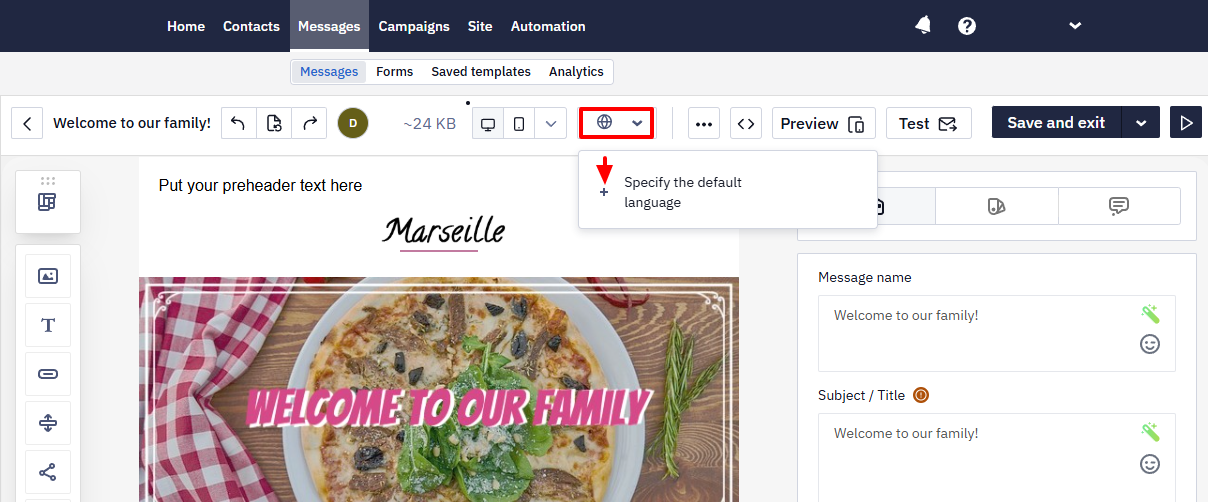
The selected language code will be displayed instead of the globe icon. Click on it and add the desired language versions.
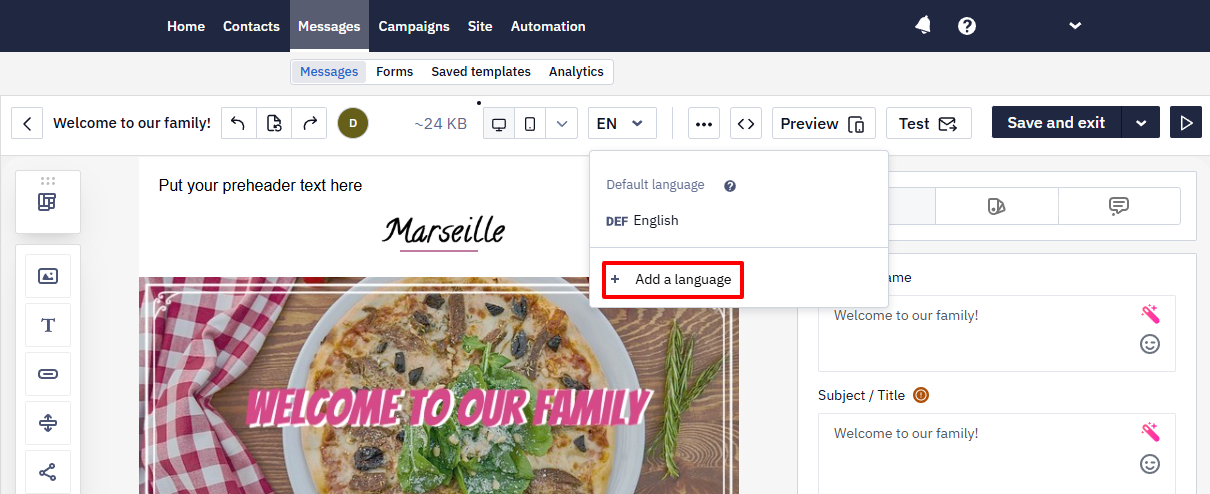
The number of language versions you can create is limited only by the pricing package.
You can create messages that are different or identical in structure and content. Changing one version does not affect the others.
ImportantWhen you add a language, the system automatically creates a copy of the message you are editing at the moment. So if you edit the message in Polish, the system will duplicate this message but not a copy of the message in the default language. This feature simplifies work with languages belonging to the same language group.
For example, it is logical to copy the message in Portuguese for the campaign in Spanish, or copy the message in Danish for the campaign in Norwegian. Since these languages belong to one family, they have a similar structure and stylistics, meaning your campaigns would need minor editing in terms of design.
If You Already Have Separate Templates per Language
A common starting point is a set of separate single-language messages, each with its own message ID. There is no automatic way to merge several existing messages into one multilingual message — every language version inside a multilingual message is created as a copy of the template you are editing, not as a link to another message.
To consolidate them:
- Open the message you want to keep as the base and set its default language.
- Add a language version. The system creates it as a copy of the current template.
- Open the existing single-language template for that language, copy its HTML, and paste it into the newly created language version.
- Repeat for each remaining language, then check senders, subject lines, and links in every version.
After that, the campaign is launched from the single multilingual message, and the old single-language messages can be archived. Their message IDs are not carried over, so update any API calls or workflow blocks that referred to them.
Replacing and Deleting the Default language
To switch between languages, use the drop-down list. You can replace any language, remove it, or set it as default.
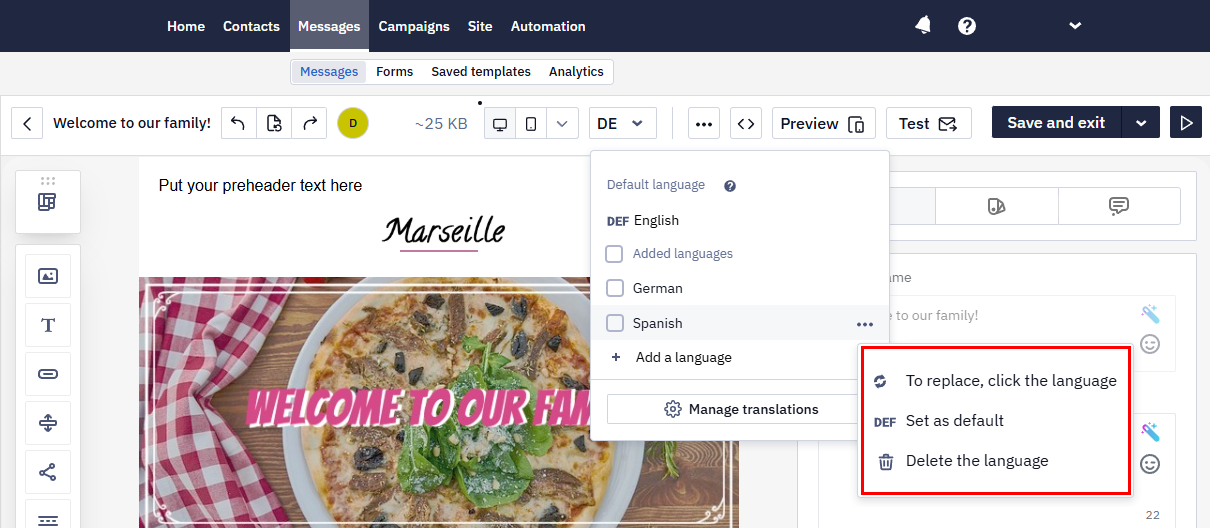
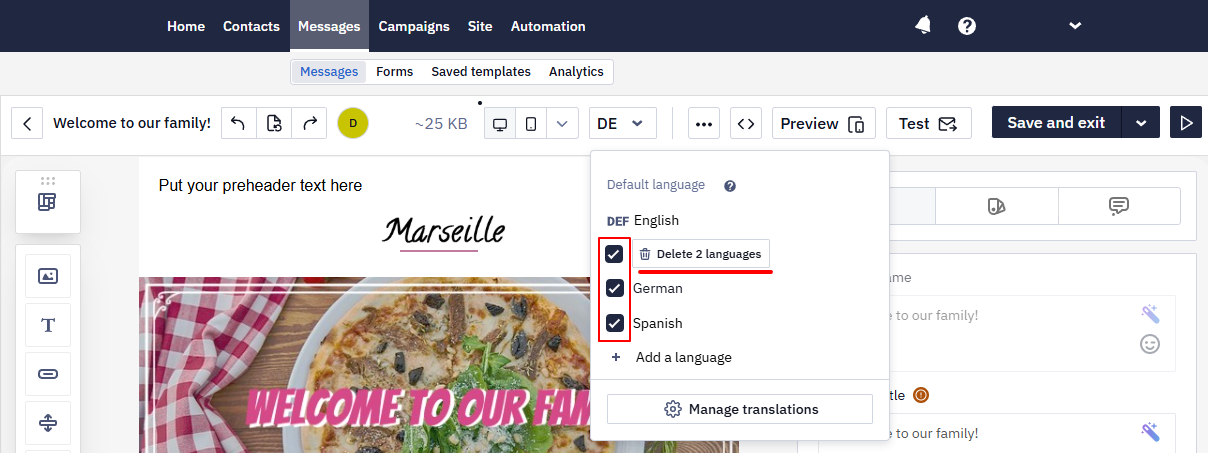
When deleting a language version, you can select multiple versions.
The process of scheduling/launching a broadcast multilingual campaign is standard. The system will automatically send the necessary content to the corresponding contact. You don't need to build segments based on the languages.
Displaying Multilingual Messages in an Account
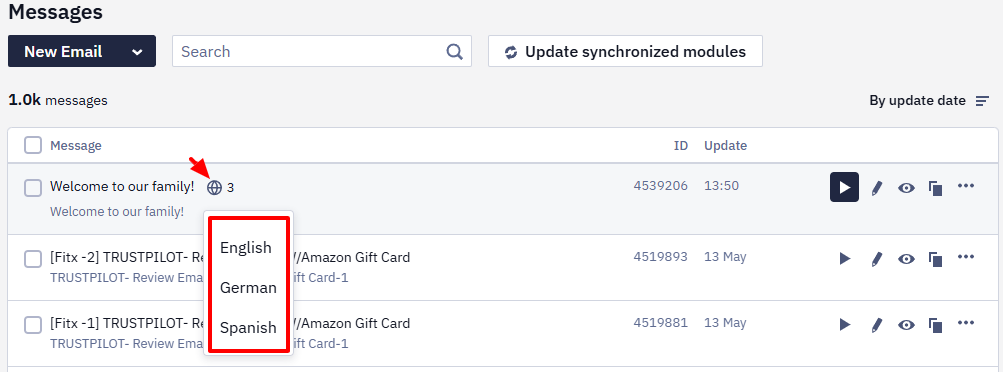
Multilingual messages in the lists are marked with a globe icon. The number next to the campaign’s name indicates the number of its language versions.
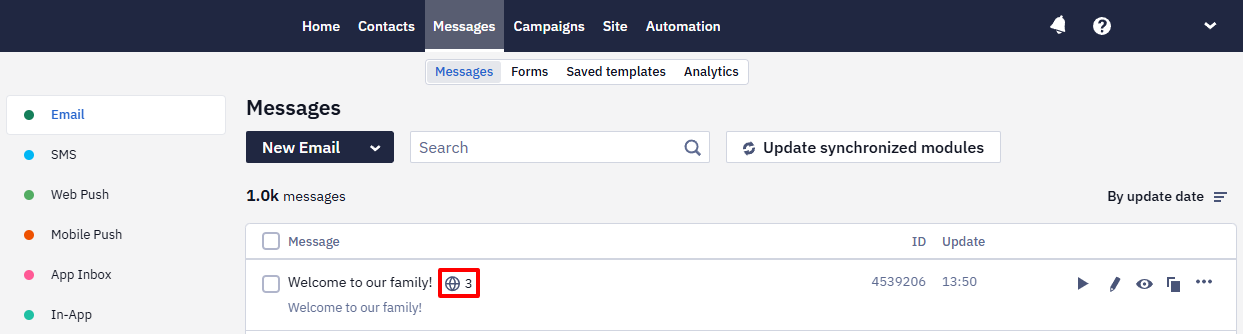
Hover over the icon to see the list of added languages. You can go straight to editing the necessary template by clicking the corresponding language in the drop-down list.
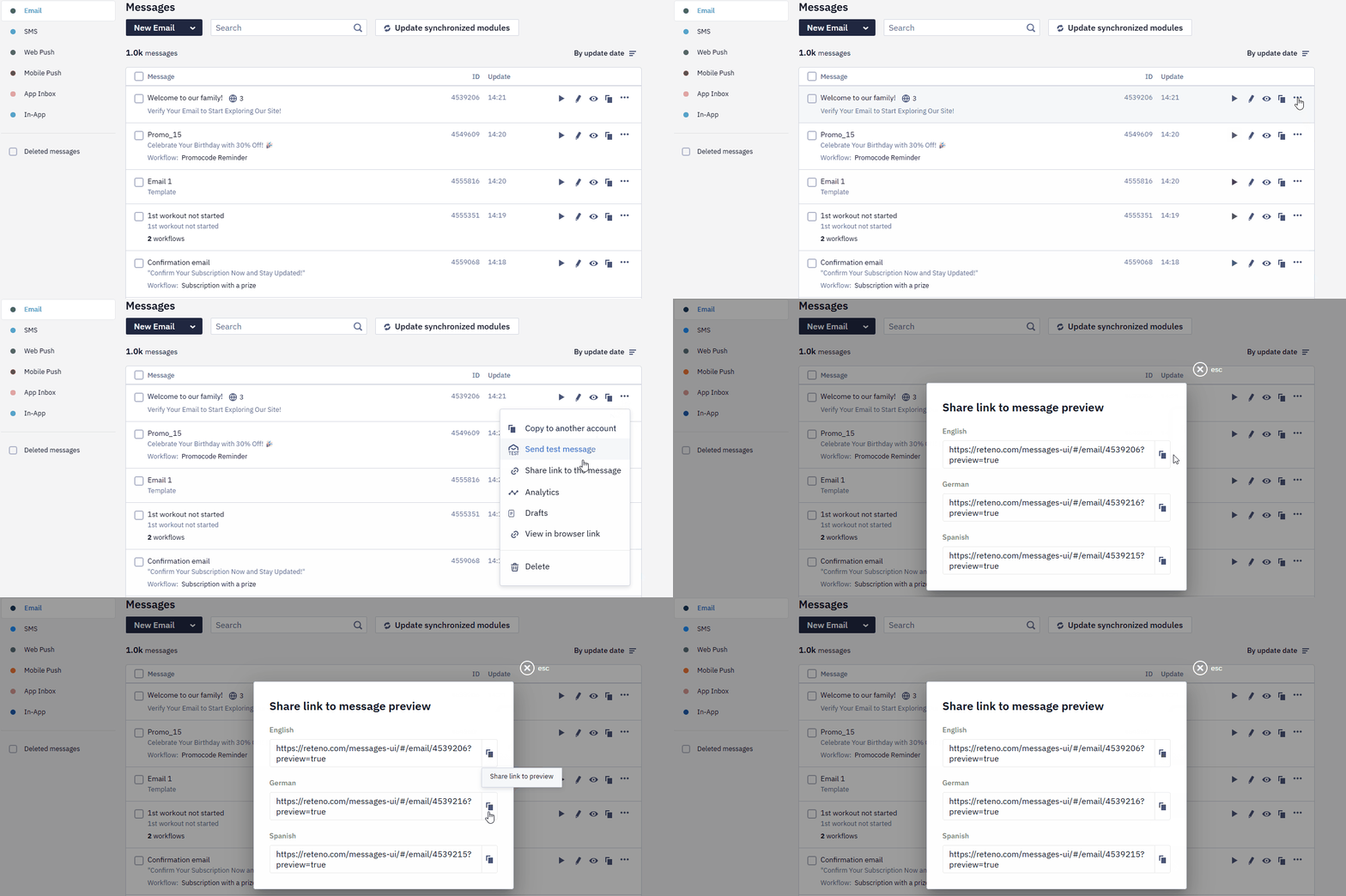
Link to a Language Version
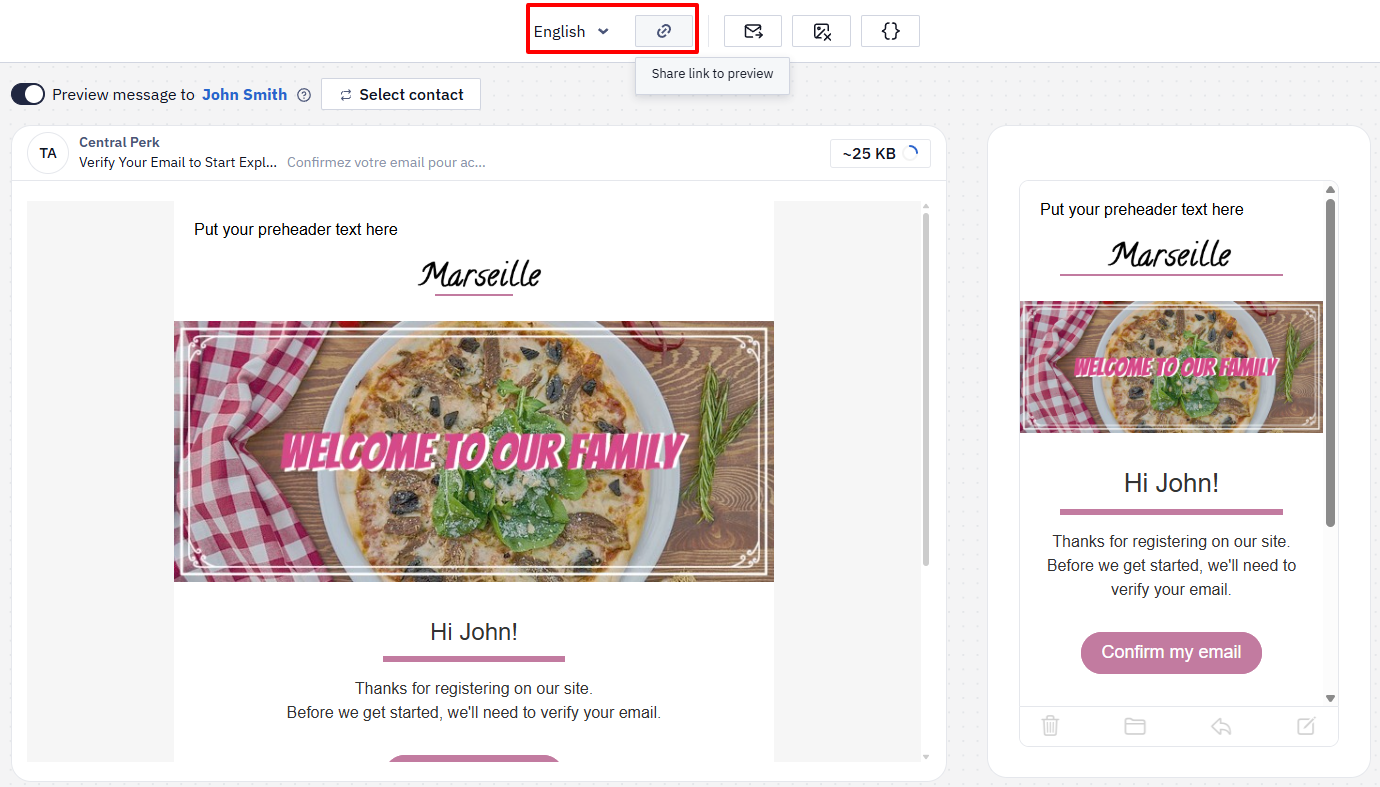
You can copy a link to a specific language version of a message:
- from the message list;
- from the preview window.
After creating a multilingual message, you can proceed to creating a multilingual campaign.
Updated 26 days ago