
Improving Campaign Performance with One from Many
Most platforms give you A/B testing — you split traffic, wait, pick a winner, and repeat manually. One from many is a different model: you add variants to a shared pool, and Reteno continuously rotates, learns, and optimizes in the background — without any workflow changes on your side.
The result is a workflow that gets better on its own. You focus on adding new challengers; Reteno handles the rest.
See details on setting up the One from many message block here.
What the Block Does
At each workflow step where you place One from many, Reteno:
- Rotates variants to collect performance data.
- Prioritizes stronger variants over time (optimization is based on CTR).
- Avoids repetition (freshness rules), so contacts don’t receive the same variant too often.
- Automatically excludes underperformed variants from the pool.
When to Use It
Use One from many when you want:
- Deliverability-friendly testing of first-touch emails
- Message order optimization in flexible long chains
- Variety in repeating trigger campaigns
- Lightweight hypothesis testing without rebuilding workflow logic
- Continuous campaign optimization with a stable operating rhythm
Use Cases
1. Email Deliverability Optimization
Deliverability is the most critical use case for One from many. If mailbox providers (Gmail, Yahoo, Outlook, etc.) see your sender reputation as weak, running other campaigns doesn’t make much sense — emails will be more likely to land in spam, get throttled, or be blocked.
So the question is: which campaign should you use to build and protect that reputation first? In most products, it’s the Abandoned Subscription workflow — it usually drives the most revenue and has the highest user intent, which typically translates into stronger engagement signals (especially Open Rate). That makes Abandoned Subscription the best place to fight for a consistently high OR and use One from many to find the email variant users respond to best.
Goal: Lift Open Rate (and downstream clicks) by testing multiple first-touch email variants — similar to ad creative testing.
Best for
- Abandoned Subscription
- Any first-touch triggered email that sets early reputation signals
Setup
- Step 1 (first email): One from many with 3–5 “simple-first” variants
- Plain design, no images, individual tag for 1st message’s variants
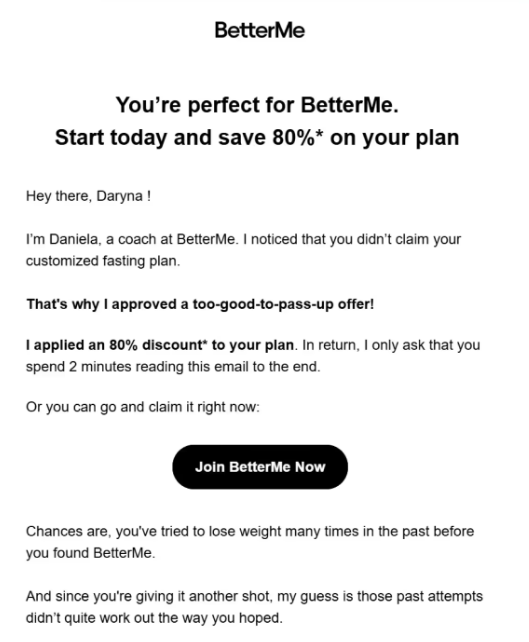
- Test subject + preheader + first screen
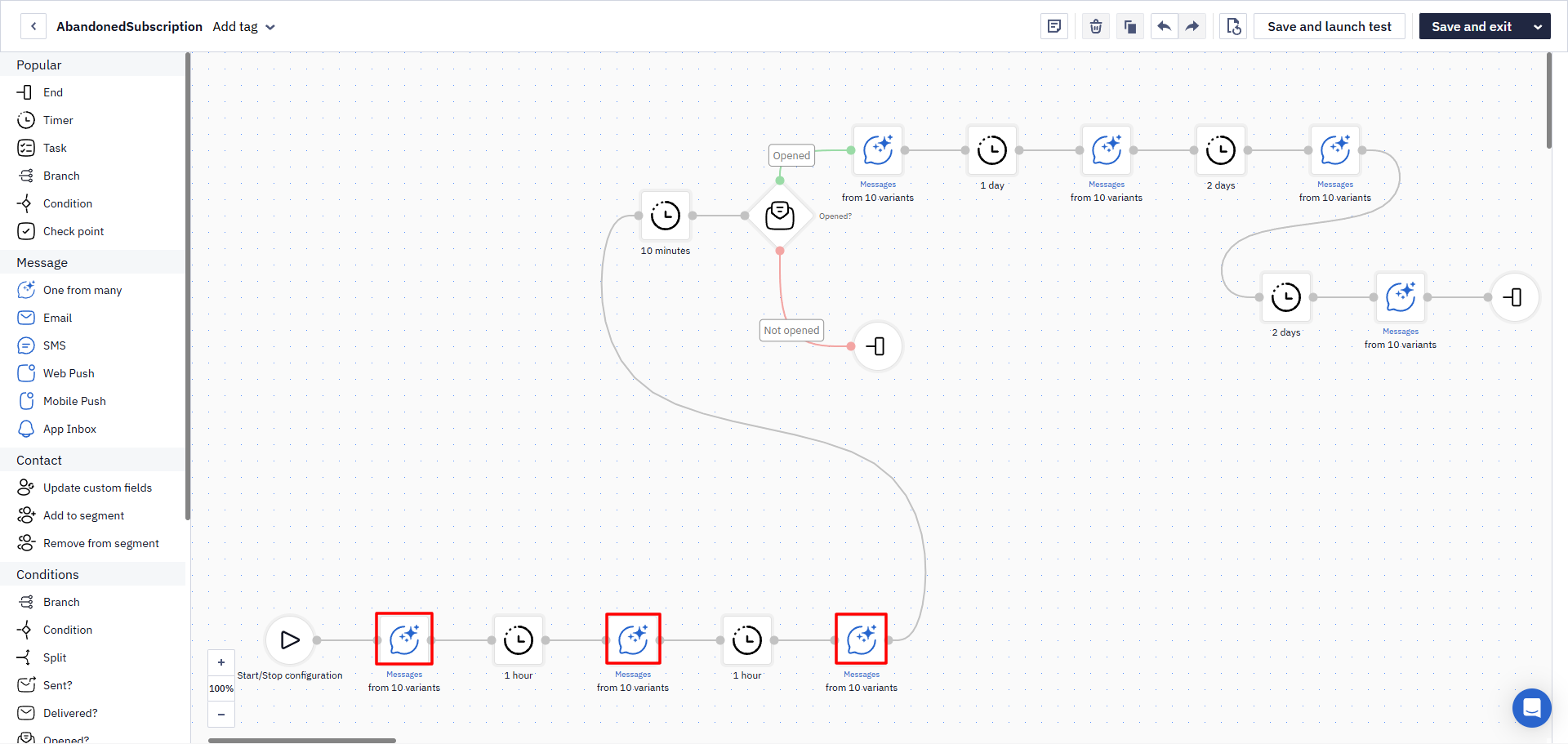
- Step 2+ (next emails): more creative variants
- Layouts, social proof, offers, richer content, individual tag for 2-3/5 initial messages’ variants
Tips
- The block optimizes by CTR, so give every variant a meaningful click target even if OR is your main KPI.
- Keep offers comparable across variants to avoid noisy results.
Measure
- Primary: Open Rate of the first 3-5 emails
- Secondary: CTR, conversions, revenue per send
2. Sequence Swapping
In long chains where strict order doesn’t matter, performance often depends on which message appears earlier. One from many can help you “shuffle” the sequence across contacts and learn better ordering without building multiple branches.
Goal: Discover which message performs best as 1st/2nd/3rd in a chain when order is flexible.
Best for
- Abandoned Subscription series with interchangeable reminders
- Any multi-day trigger flow where messages are modular
Setup
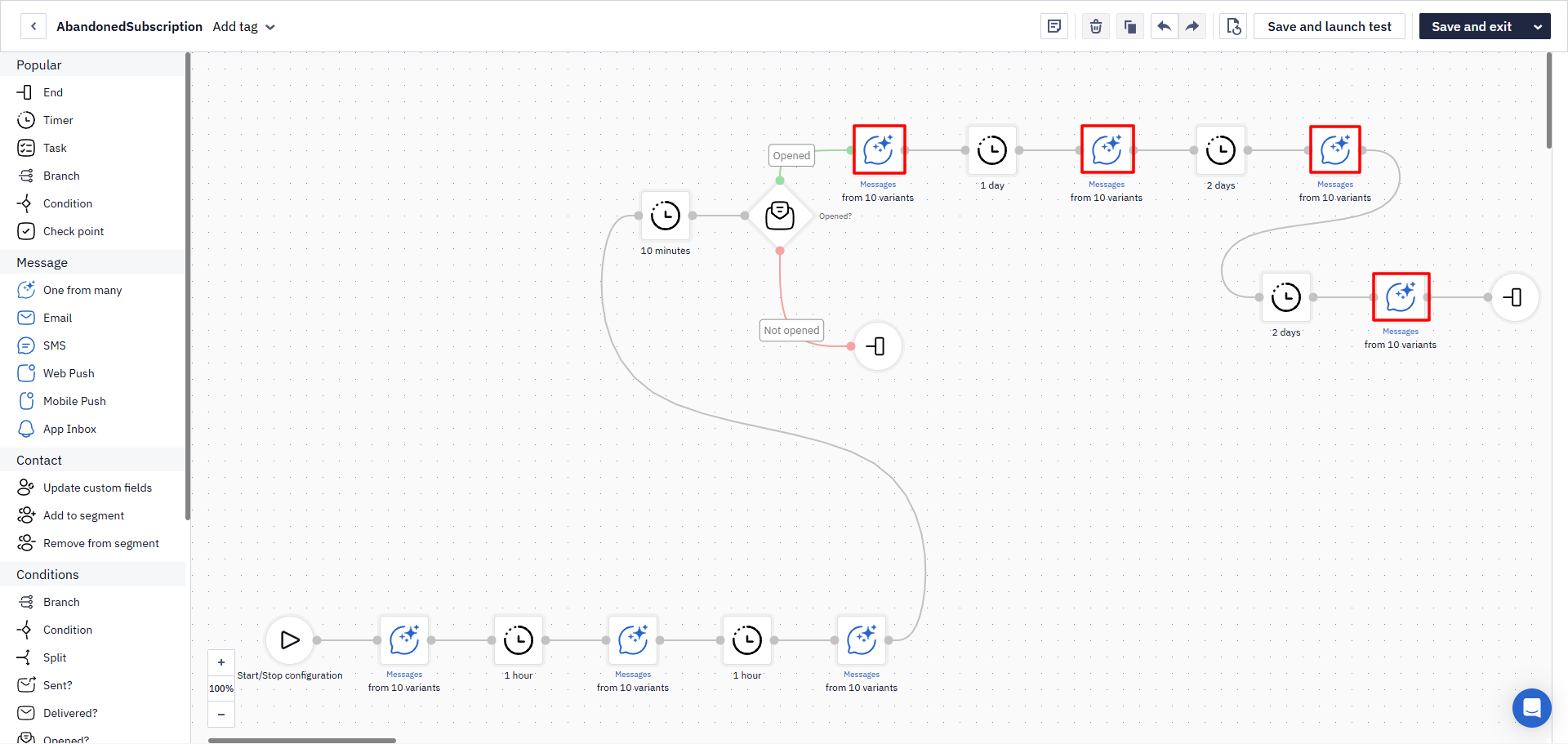
- Place One from many at each step (Day 1 → Day 2 → Day 3…)
- Point every block to the same pool tag (one shared message pool)
Tips
- Plan pool size: roughly 2× the number of One from many blocks in the chain.
- Keep message intent consistent (all are “reminders”), otherwise sequence learning becomes hard to interpret.
Measure
- Primary: total workflow conversion rate
- Secondary: CTR by step, time-to-conversion
3. Diversify Communication
If users can re-enter a trigger workflow multiple times, sending the same message again and again increases fatigue. One from many keeps content fresh without adding complex branching.
Goal: Maintain variety across repeated launches so messages stay relevant and less repetitive.
Best for
- Lesson/training reminders
- Recurring usage nudges
- Churn prevention/reactivation prompts
- Any workflow with frequent re-entry
Setup
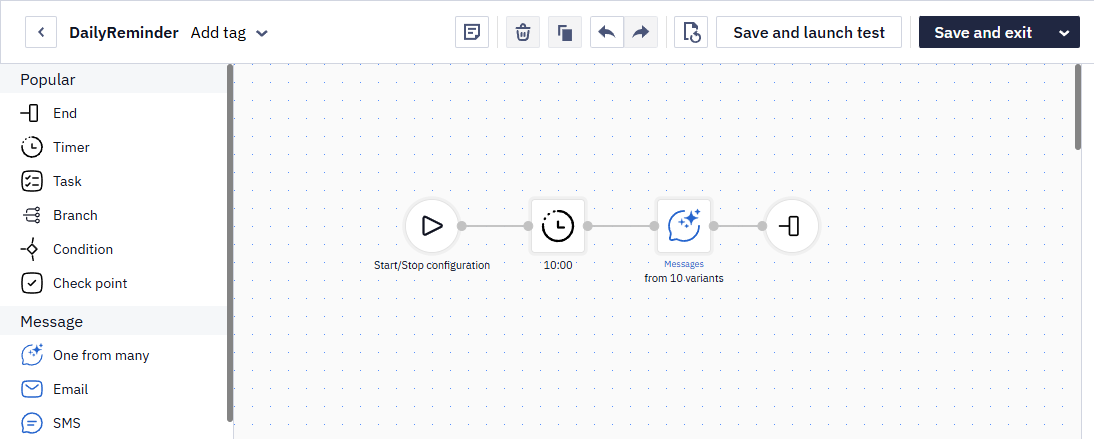
- One from many with a large pool (8+ variants recommended)
- Keep variants within the same intent (same “ask”, different angle)
Tips
- Use a standard stop tag (e.g., Stopped) to remove weak variants fast.
- Don’t overload the pool with radically different offers — segment pools instead.
Measure
- Primary: CTR/action completion over time
- Secondary: unsubscribe rate, complaint signals (for email)
4. Hypothesis Testing
One from many lets you test ideas quickly without redesigning workflows. You swap variants in the pool, not the workflow structure.
Goal: Validate a specific hypothesis quickly with real production traffic.
Best for
- Copy tests (short vs long, tone)
- Personalization tests (generic vs personalized)
- Framing tests (discount vs social proof)
Setup
- Add 2–5 variants under one pool tag
- Run until you have meaningful volume
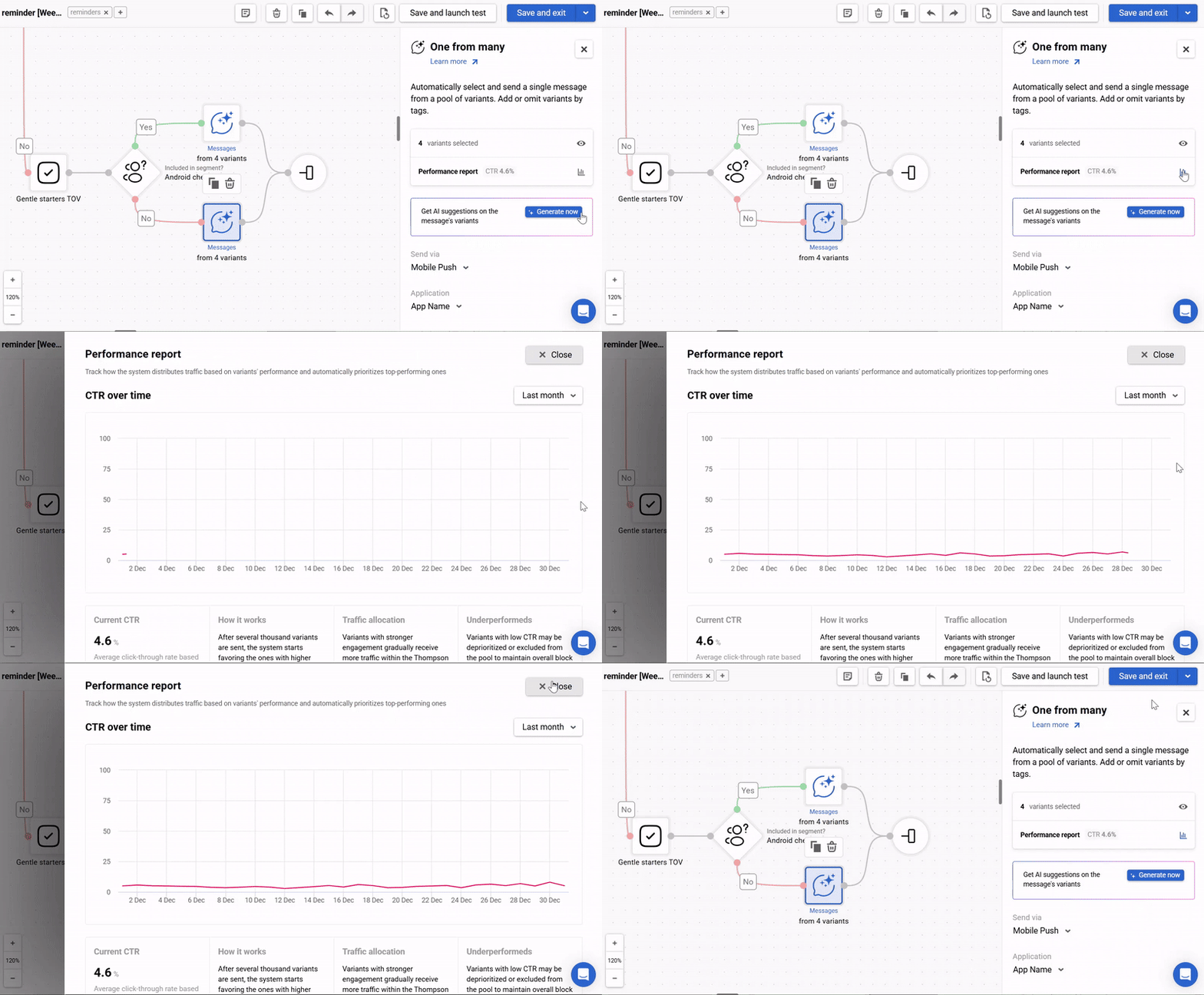
- Compare results
Tips
- Change one major variable at a time per pool to keep results interpretable.
- Make CTAs comparable so CTR remains a clean learning signal.
Measure
- Primary: CTR (optimization signal)
- Secondary: conversions/revenue per send
5. Continuous Optimization
Key trigger workflows run continuously. One from many turns them into an ongoing optimization system instead of periodic manual experiments.
Goal: Keep improving performance over time with minimal maintenance.
Best for
- Abandoned Subscription
- Reactivation flows
- Any evergreen trigger workflow
Setup
- Keep one stable pool tag per key block (e.g., AbSub_D1_Pool)
- Every 1–2 weeks:
- Add 1–2 new challengers
- Tag weak variants as Stopped (or rely on Underperformed where applicable)
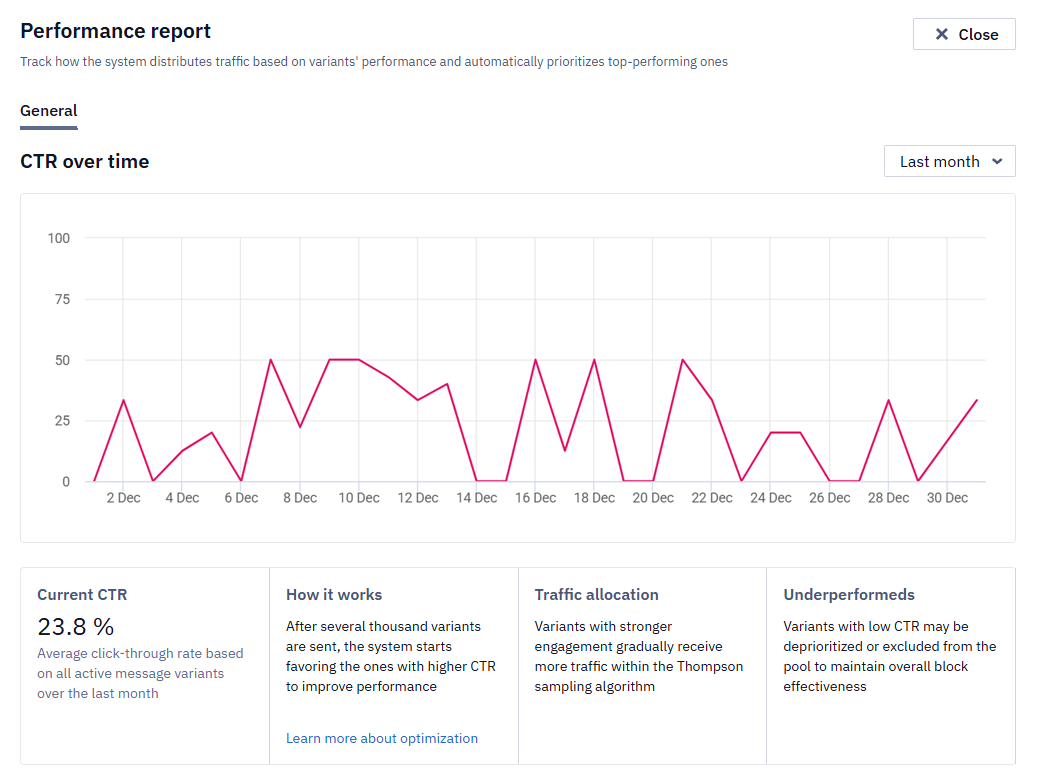
- Track aggregated block trend + per-variant results in reports
Tips
- Introduce changes gradually to avoid destabilizing learning.
- Maintain a consistent naming convention for pools across steps and channels.
Measure
- Primary: CTR trend + conversion trend over time
- Secondary: winner stability across weeks/segments
Updated 3 months ago